
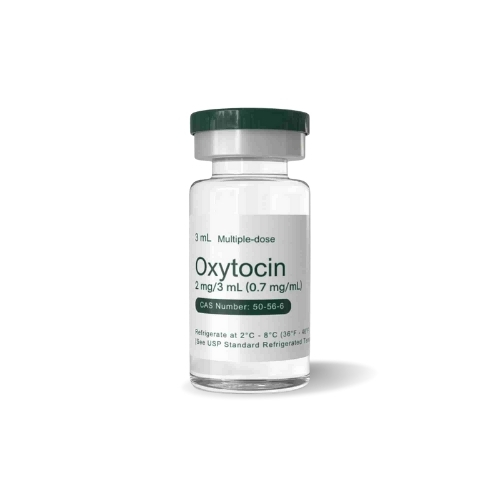
Oxytocin is a naturally occurring neuropeptide hormone that regulates social bonding, emotional behavior, reproductive functions, and stress modulation. Commonly studied for social cognition, fertility, and emotional regulation research.
$49.00
For laboratory research use only. Not for human or animal use or consumption. Not a drug, food, dietary supplement, or cosmetic. Not approved by the FDA for any medical use.
Oxytocin (Cys-Tyr-Ile-Gln-Asn-Cys-Pro-Leu-Gly-NH2) is a nine-amino-acid peptide hormone synthesized in the hypothalamus and released from the posterior pituitary gland. It functions as both a hormone and neurotransmitter, influencing a wide range of physiological and behavioral processes.
Binds to oxytocin receptors (OXTR) in the brain, reproductive system, and cardiovascular tissues
Modulates emotional bonding, trust, empathy, and stress response through central pathways involving dopamine, serotonin, and cortisol
Regulates uterine contractions, lactation, and smooth-muscle relaxation peripherally
Supports fertility, social behavior studies, and regenerative research
Social Cognition / Emotional Regulation: 48 mcg per injection, once daily
Fertility / Reproductive Research: 100 mcg 30–45 minutes before experimental procedures
Treatment Duration: Typically several weeks, adjustable based on response and research objectives
Individual Response: Effects may vary; start at lower doses and adjust according to experimental outcomes
Monitoring: Regular assessment of physiological and behavioral responses is recommended for accuracy and safety
Class: Neuropeptide hormone / social-bonding and mood-modulating
Category: Repair Peptides
Primary Research Focus: Emotional regulation, social cognition, fertility, and reproductive function studies
You must be logged in to post a review.
Reviews
There are no reviews yet.