Description
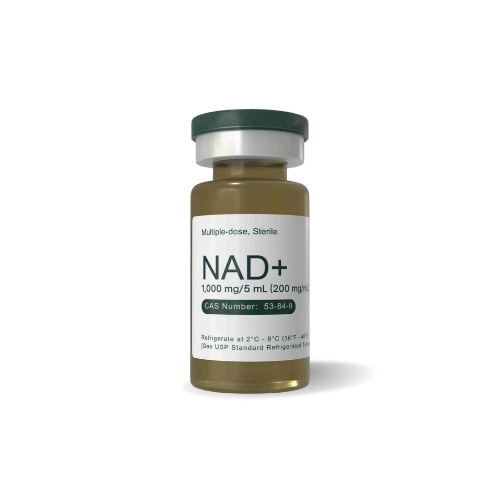
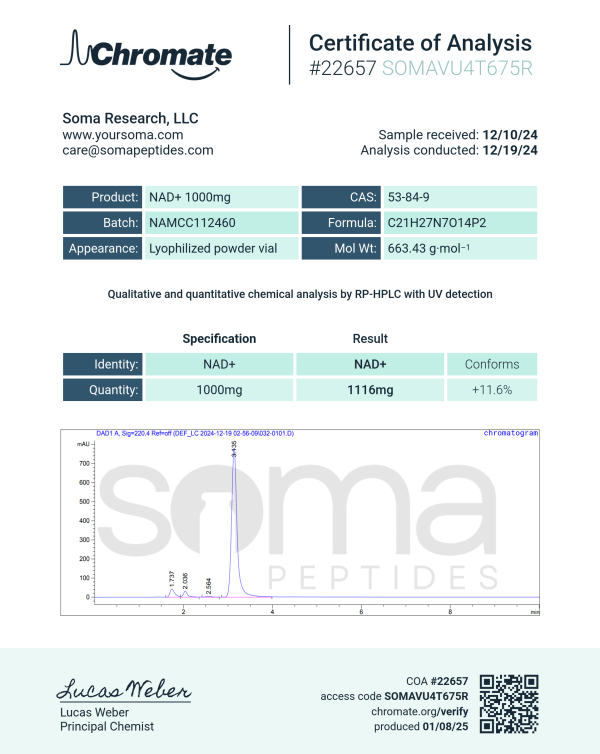
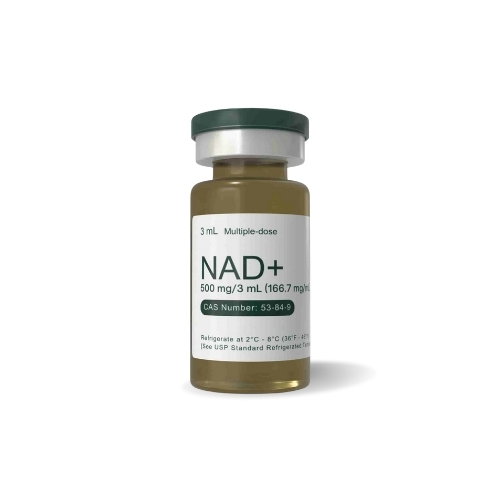
NAD⁺ (Nicotinamide Adenine Dinucleotide) is a crucial coenzyme present in all living cells. It plays a central role in cellular energy production, redox reactions, and the activation of longevity-related enzymes. NAD⁺ is a key molecule in metabolic regulation and cellular resilience research.
Mechanism of Action
-
Serves as a redox carrier in the Krebs cycle and oxidative phosphorylation, producing ATP for cellular energy
-
Acts as a substrate for sirtuins (SIRT1–7), PARPs, and CD38, which regulate DNA repair, mitochondrial biogenesis, and inflammatory signaling
-
Restoration of NAD⁺ levels is associated with improved metabolic efficiency, neuroprotection, and cellular resilience
Dosage Guidelines (Research Use)
-
Subcutaneous Injection: 100–120 mg per session, 1–2 times per week for anti-aging protocols
-
IV Therapy: 250–1,000 mg per infusion, frequency varies (weekly to monthly) depending on research goals
-
Higher doses may be used in studies focusing on energy restoration, chronic fatigue, or neurodegenerative conditions
Important Notes & Safety
-
Side Effects: Nausea, flushing, chest pressure, fatigue, headache, or low blood pressure may occur during or after administration
-
Formulation Notes: NAD⁺ solutions are sensitive to pH, light, and heat. Reconstitute immediately before use, protect from UV exposure, and discard if solution becomes cloudy. Slight yellow hue or crystallization is normal
Useful Information
-
Class: Essential cellular coenzyme / metabolic regulator
-
Category: Energy Support Peptides
-
Primary Research Focus: Anti-aging, metabolic support, neuroprotection, energy metabolism

Reviews
There are no reviews yet.