
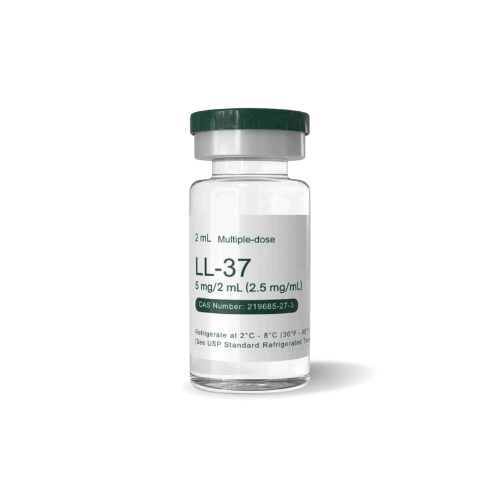
LL-37 is a human antimicrobial peptide (AMP) with potent immunomodulatory and wound-healing properties. Commonly used in research to study infection control, immune regulation, and tissue repair.
$83.00
For laboratory research use only. Not for human or animal use or consumption. Not a drug, food, dietary supplement, or cosmetic. Not approved by the FDA for any medical use.
LL-37 (LLGDFFRKSKEKIGKEFKRIVQRIKDFLRNLVPRTES) is the only known human cathelicidin peptide, derived from the precursor hCAP-18. It plays a dual role in innate immunity by directly killing pathogens (bacteria, viruses, fungi, biofilms) and modulating inflammatory responses, promoting tissue repair and wound healing.
Binds to microbial membranes, causing pathogen disruption
Interacts with host receptors such as FPR2, TLR2, and P2X7, activating pathways for angiogenesis, epithelial repair, and immune cell recruitment
Supports skin defense, lung repair, chronic wound recovery, and systemic immune regulation
Can be combined with BPC-157 or KPV to enhance tissue repair while modulating inflammation
Antimicrobial Use: 1–2 mg daily, divided into 2–3 doses
Wound Healing: 0.5–1 mg applied directly to wound site once or twice daily
Chronic Condition Research: 100–200 µg daily to study immunomodulatory effects
Frequency & Cycle: Adjust based on experimental response and tolerance
Mild, transient symptoms may occur: flu-like feelings, skin flushing, temporary inflammation, brain fog, or fatigue
Symptoms are generally short-lived and indicate immune modulation rather than intolerance
Hydration, sleep, and gentle movement help support clearance of inflammatory byproducts
Gradual dose titration is recommended if symptoms persist
Class: Endogenous antimicrobial & immunomodulatory peptide
Category: Immune Support Peptides
Primary Research Focus: Pathogen control, immune modulation, wound healing, tissue repair
Reviews
There are no reviews yet.