Description
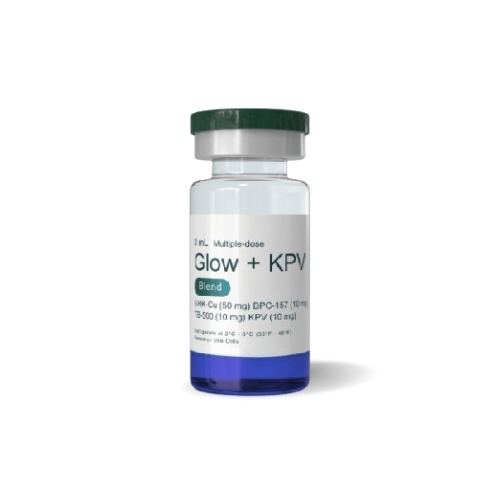
The GHK-Cu / BPC-157 / TB-500 / KPV (GLOW) blend is an advanced quad-peptide complex engineered to target multiple regenerative and anti-inflammatory pathways. This combination is designed for laboratory research on healing, tissue remodeling, and overall cellular restoration.
Mechanism of Action
-
GHK-Cu (Copper Peptide): Stimulates collagen and elastin synthesis, enhances angiogenesis, improves skin texture, and supports wound healing through copper-mediated growth factor signaling.
-
BPC-157: A cytoprotective and angiogenic peptide that promotes fibroblast migration, collagen alignment, and vascular healing, while supporting gut–brain–immune axis integrity.
-
TB-500 (Thymosin Beta-4 fragment): Enhances cell mobility and actin polymerization, accelerating tissue regeneration and reducing fibrotic scarring.
-
KPV (Lys-Pro-Val tripeptide): A potent anti-inflammatory peptide fragment of α-MSH that downregulates NF-κB, TNF-α, and IL-6, protecting tissues from chronic inflammation and oxidative stress.
Together, these four peptides create a multi-pathway repair system, promoting deep tissue healing, anti-inflammatory effects, and visible regenerative outcomes across skin, muscle, joints, nerves, and vascular tissues.
Dosage Guidelines (Research Use)
-
GHK-Cu: 2.5 mg per day in the morning
-
BPC-157: 500 mcg per day in the morning
-
TB-500: 500 mcg per day in the morning
-
KPV: 500 mcg per day in the morning
-
Cycle Length: Depends on health status and research protocol
-
Loading Phase: 5 days per week, 2 days off, for 4–5 weeks
-
Maintenance Phase: 2–3 times per week
Side Effects (Research Use)
-
Redness, swelling, or bruising at the injection site
-
Mild discomfort or pain, sometimes radiating
-
Allergic reactions (e.g., itching, rash), primarily associated with GHK-Cu
Useful Information
-
Class: Quad-peptide regenerative and anti-inflammatory complex
-
Category: Repair Peptides
-
Primary Research Focus: Tissue regeneration, inflammation reduction, cellular rejuvenation
Storage: Refrigerate at 2–8°C (36–46°F) to maintain peptide stability.

Reviews
There are no reviews yet.