
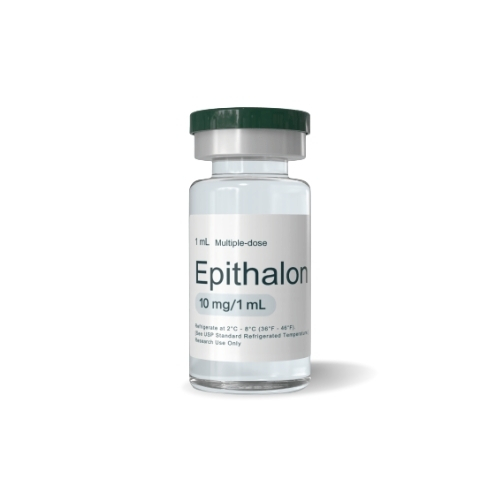
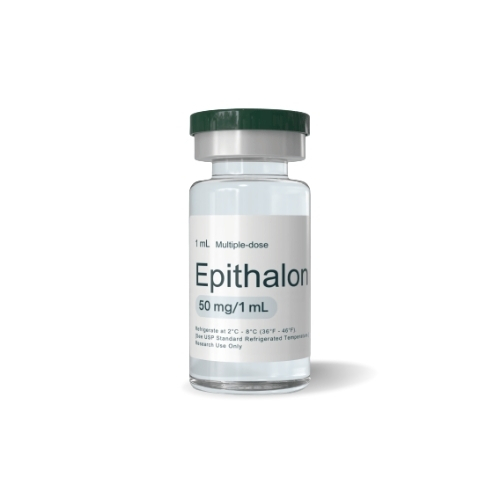
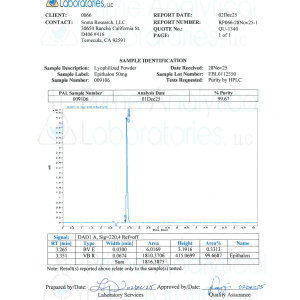
Epithalon is a synthetic pineal-derived tetrapeptide (Ala-Glu-Asp-Gly) studied for its potential geroprotective effects, telomerase activation, and support of circadian rhythm and hormonal regulation. It is commonly researched for anti-aging and cellular longevity applications.
$39.00 – $109.00Price range: $39.00 through $109.00
For laboratory research use only. Not for human or animal use or consumption. Not a drug, food, dietary supplement, or cosmetic. Not approved by the FDA for any medical use.
Epithalon (Ala-Glu-Asp-Gly) is a synthetic analogue of Epithalamin, a naturally occurring peptide produced by the pineal gland. Classified as a telomerase activator and geroprotective peptide, Epithalon is widely studied for its potential to support cellular longevity, genomic stability, and circadian rhythm regulation.
Epithalon stimulates telomerase activity, promoting the maintenance and restoration of telomere length in somatic cells. By supporting genomic stability, it may contribute to improved cellular function and delayed markers of cellular aging.
Additionally, Epithalon influences pineal and hypothalamic-pituitary functions, regulating melatonin synthesis, circadian rhythm, and the secretion of hormones including LH, FSH, and growth hormone. Through its epigenetic and antioxidant effects, Epithalon is studied for its potential to maintain cellular health and systemic homeostasis.
General Dose: 10 mg per day
Administration: Subcutaneous injection, either as a single 10 mg dose at bedtime or two 5 mg doses (morning and bedtime)
Duration: Every other day for 5 days
Cycle Frequency: Up to twice per year, with 4–6 month intervals between cycles
Designed for laboratory research use only
Not intended for human or animal consumption or medical use
Dosage may be adjusted slightly for experimental purposes; minor variations are not expected to significantly alter observed outcomes
Class: Pineal-derived tetrapeptide / telomerase activator / geroprotective peptide
Category: Anti-Aging & Longevity Peptides
Primary Research Focus: Cellular longevity, telomere maintenance, circadian rhythm regulation
| Strength | 10mg, 50mg |
|---|
You must be logged in to post a review.
Reviews
There are no reviews yet.